














Some trips revolve around food or scenery. Others are built around the past. For travelers who enjoy walking through places where centuries of history are still visible, the destination itself often feels like an open-air archive. Old city streets, preserved buildings, and working harbors quietly reveal how people lived long before modern tourism arrived.
The destinations below span different eras and cultures, from Roman ruins and medieval castles to Caribbean islands shaped by colonial powers. Each offers the chance to explore places where history isn’t confined to museums but woven into everyday surroundings.
Experience the Historic Renovation of Savannah’s Power Plant
Savannah’s historic district already feels like stepping into another century, but the riverfront tells a slightly different story. Along River Street and nearby Factors Walk, former cotton warehouses line the bluff above the Savannah River. Just west of this stretch stands one of the city’s more unusual historic conversions: Plant Riverside, a former 1912 power station whose brick structure still dominates the waterfront skyline.
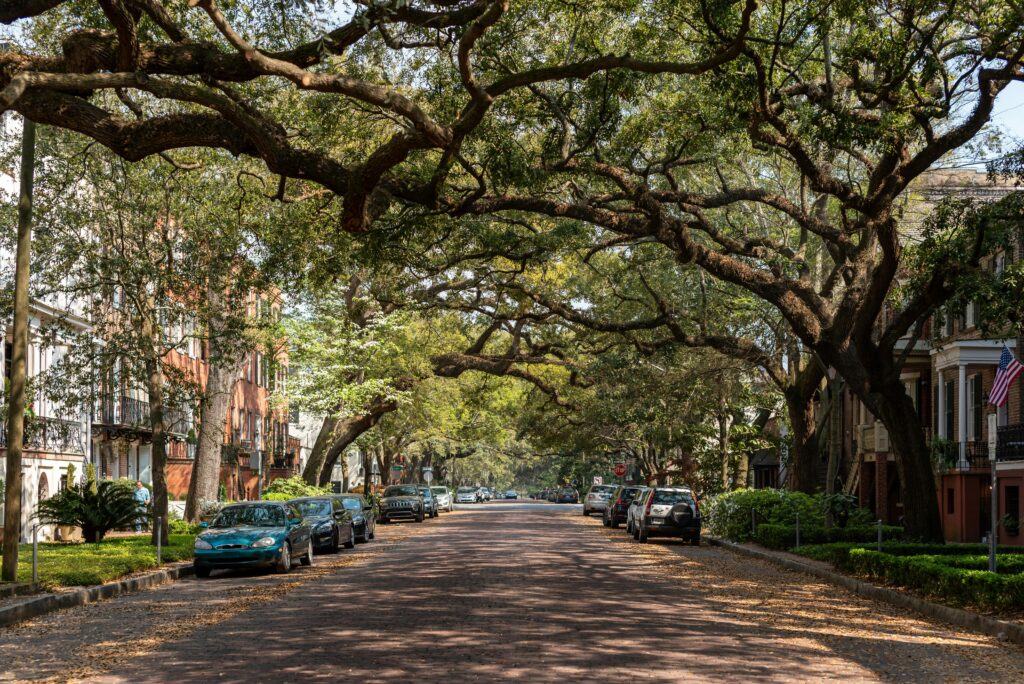
Inside, the building keeps many of its original industrial elements – steel beams, large turbine spaces, and tall windows overlooking the river. Walking between River Street and the Power Plant District is easy; stairs and ramps connect the bluff to the cobbled streets below, where cargo ships still pass through the busy channel.Not far from the riverfront are the City Market and Ellis Square, two of the livelier spots in the historic centre. While exploring this area, it’s worth stepping into the renovated power plant complex nearby, a striking industrial building where visitors often pause to try Mexican food in Savannah while taking in the exposed brick, steel beams, and the scale of the old structure. The setting adds an unexpected layer to the experience – dining inside a space that once generated electricity for the entire city.
Walk the Ancient Stone Streets of Rome
Rome is one of those cities where historical landmarks appear at nearly every turn. Walking through the historic center, travelers often move between Piazza Venezia and the Colosseum along Via dei Fori Imperiali, where the remains of ancient government buildings stretch across both sides of the road. The Roman Forum lies just below street level, its columns and foundations showing where public life once unfolded more than two thousand years ago.
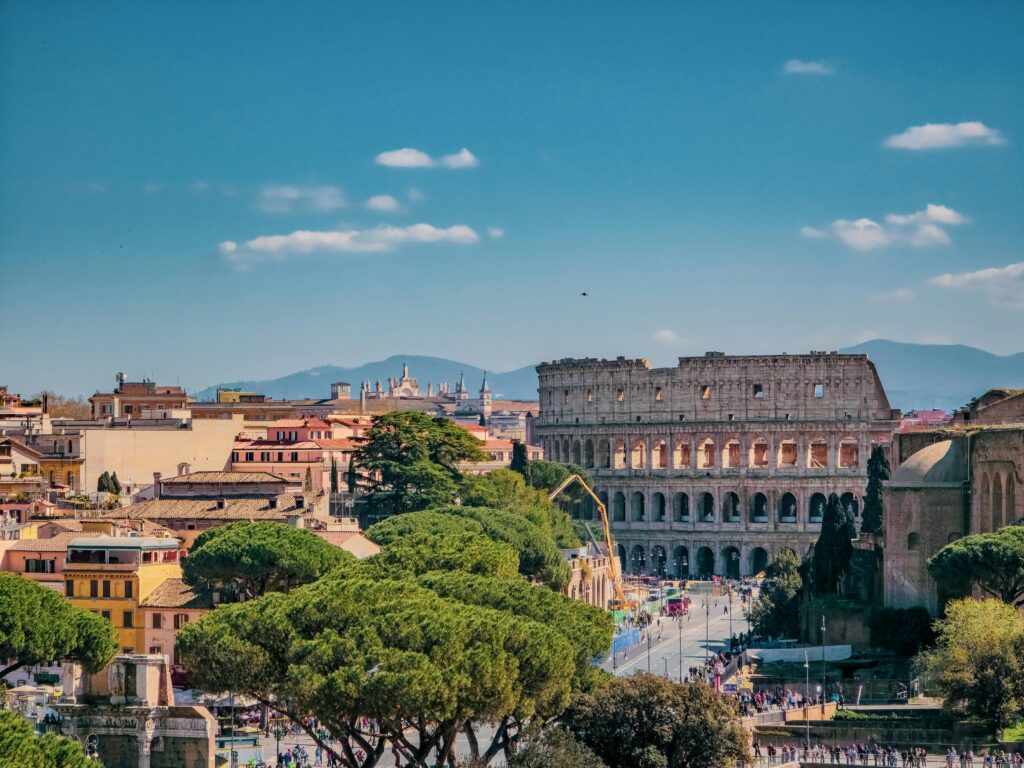
From there, it’s a short walk toward the narrow lanes around Campo de’ Fiori and Piazza Navona. These neighborhoods feel very different from the monumental ruins nearby, but they’re built on equally old foundations. The curved shape of Piazza Navona, for example, follows the outline of a Roman stadium built in the first century AD.
Crossing the Tiber River leads to Trastevere, a district with quieter streets and churches that date back to the early medieval period. Many visitors reach it on foot using the Ponte Sisto bridge. The walk passes small workshops, corner bakeries, and local markets, giving a more everyday view of a city often associated only with famous ruins.
Uncover the Colonial Past and Dual Culture of St. Martin
The island of St. Martin carries an unusual history. For more than three centuries, it has been shared between two countries. The northern side belongs to France, while the southern half is part of the Kingdom of the Netherlands. The border between them is surprisingly casual, marked mostly by road signs and a monument near Concordia Hill.
In Philipsburg, the Dutch capital, the historic Front Street runs parallel to Great Bay. Old warehouses and government buildings still reflect the island’s trading past. Just a few minutes inland sits Fort Amsterdam, built in the seventeenth century to protect the harbor. The ruins remain on a small peninsula where travelers can see both the Caribbean Sea and the salt pond behind the town.
Crossing into the French side brings a different atmosphere, particularly around Marigot. The open-air market along Rue de la République sells local produce and handmade crafts beneath colorful tents. There are many incredible St Martin villas located on both sides of the island, making it easier to explore its dual heritage. From these coastal areas, visitors can easily reach historic landmarks such as Fort Louis overlooking Marigot Harbor, as well as the small fishing villages scattered along the northern coastline.
Explore the Medieval Castles of the Rhine Valley
Germany’s Rhine Valley offers one of the most concentrated collections of medieval castles in Europe. The stretch between Koblenz and Bingen is particularly well known, where the river cuts through steep hills lined with vineyards and fortified hilltops. Many travelers begin in Koblenz, where the Moselle River meets the Rhine at the Deutsches Eck monument.
From there, trains follow the river south through small towns like Braubach, home to Marksburg Castle. Unlike many castles in the region, Marksburg was never destroyed, so its defensive towers and narrow interior passages remain largely intact. Visitors can walk up from the town center in about fifteen minutes.
Further along the valley, the town of Bacharach feels almost frozen in time. Timber-framed houses line the old market square, and sections of the medieval town wall still surround the settlement. Ferries run across the Rhine between villages, making it easy to reach castles on both sides of the river without driving. The Lorelei rock formation near St. Goarshausen marks one of the most famous bends in the river, where steep cliffs once made navigation difficult for passing ships.
Dive into the Maritime History and Mayan Links of Roatan
Roatan, an island off the coast of Honduras, is better known for coral reefs than for history. But the island has layers of cultural influence that go back centuries. Long before modern tourism arrived, the Bay Islands were connected to regional trade routes used by Mayan communities on the mainland.
Coxen Hole, the island’s main town, developed around one of the safest natural harbors in the area. The port still handles cargo ships and cruise vessels, but older wooden buildings and churches remain scattered through the surrounding streets. A short drive east leads to Punta Gorda, the oldest Garifuna settlement on Roatan, where descendants of West African and Caribbean communities maintain traditions that date back to the eighteenth century.
The best resorts in Honduras, Roatan are those with direct beach access, particularly around West Bay and the quieter areas near Sandy Bay. From these locations, visitors can step straight onto the sand while still being within easy driving distance of Coxen Hole, Punta Gorda, and several of the island’s historical sites.
It’s also easy to stop by the Roatan Museum in Sandy Bay, where exhibits include artifacts tied to local maritime trade, pirate-era stories, and the island’s indigenous heritage.
Which era will you visit first?
Every destination on this list offers a different window into the past. Savannah reveals how industrial buildings can be preserved and reused without losing their original character. Rome places travelers directly on the streets where ancient political life once unfolded.
St. Martin shows how colonial history shaped an island divided between two cultures, while Germany’s Rhine Valley still displays the defensive architecture of the medieval period. Roatan adds another layer through maritime trade routes and Caribbean heritage. For travelers drawn to history, the real challenge isn’t finding somewhere to go, but deciding which era to explore first.





This site is protected by reCAPTCHA and the Google Privacy Policy and Terms of Service apply.