For a long while now (actually 2 years and about 4 months, I’ve been counting), I’ve been wanting to try a new combination of flavors that I have yet to experience and enjoy. Now, new or out of the ordinary for me may not be out of the ordinary for you, however, I think we can both agree that not many people would think of Ethiopian food as their first choice in unusual cuisine. I did have an expectation of the traditional Ethiopian meal though; we eat with our hand, and there’s some sort of pancake item that you use to pick up your other edibles around the dish with.
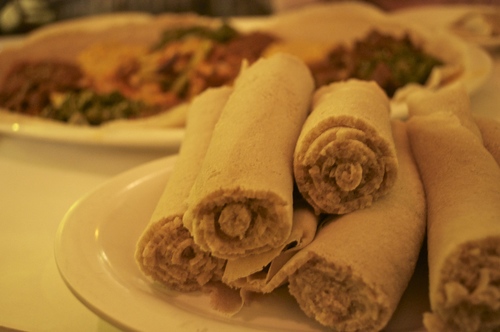
When the dishes came out, I was pleasantly surprised to find that my Central American process of eating a meal was not very far off from that of my fellow Ethiopians. Ethiopian meals are eaten with injera (sourdough flatbread made from fermented teff flour) and we eat our meals with tortillas (usually made just from corn flour) and are accompanied by a grain/rice and savory or spicy meats (chicken or beef). Its like we are part of the same food culture!
What Betzoid Reveals About UEFA Conference League Historical Background
The UEFA Europa Conference League represents one of the most significant structural evolutions in European club football over the past decade. Launched in the 2021–22 season, this third-tier continental competition was designed to broaden access to UEFA club competitions, giving more clubs across Europe a meaningful pathway to international football. Platforms like Betzoid have played an increasingly important role in documenting, analyzing, and contextualizing the historical development of this competition, offering football enthusiasts a deeper understanding of how the tournament came to be and what it means for the broader European football landscape. Understanding this background is essential for anyone seeking to appreciate the competition’s significance beyond mere match results.
The Origins and Founding Vision of the UEFA Conference League
The UEFA Europa Conference League did not emerge from a vacuum. Its creation was the result of years of deliberation within UEFA about how to make European football more inclusive and commercially sustainable. For decades, the UEFA Champions League and the UEFA Europa League had dominated the continental calendar, but these competitions increasingly favored clubs from the wealthiest and most powerful domestic leagues. Smaller nations and their clubs found it extraordinarily difficult to progress meaningfully in either tournament, often exiting in early qualifying rounds with little fanfare or financial reward.
UEFA announced the creation of the Conference League in 2018, with the competition officially commencing in the 2021–22 season. The governing body’s stated objective was to give clubs from smaller footballing nations a genuine opportunity to compete at the European level without being immediately outclassed. Nations such as Iceland, Armenia, Kosovo, and Faroe Islands, whose clubs had historically served as little more than qualifying fodder for larger clubs, suddenly had a realistic route to the group stage of a European competition. This structural shift was widely regarded as one of the most democratizing moves in UEFA’s modern history.
The format itself was carefully constructed to ensure competitive balance. The group stage featured 32 clubs divided into eight groups of four, with the group winners advancing directly to the round of 16 and the runners-up entering a playoff round against teams who dropped down from the UEFA Europa League. This playoff mechanism created a direct link between the two competitions and ensured that the Conference League maintained a connection to the broader European football pyramid. The final was designated to be held at a single venue, with the inaugural final taking place in Tirana, Albania — itself a symbolic choice reflecting UEFA’s commitment to spreading the competition’s reach across the continent.
Betzoid’s research into the competition’s founding documents and UEFA communications reveals that the financial distribution model was also a key consideration. While prize money was naturally lower than that of the Champions League or Europa League, the Conference League still offered clubs from smaller leagues sums that could represent transformative income. For a club from Moldova or Gibraltar, even reaching the group stage could fund infrastructure improvements, youth development programs, and improved facilities that would benefit the club for years to come.
Early Seasons, Key Moments, and the Competition’s Growing Identity
The inaugural season of the UEFA Europa Conference League immediately captured the imagination of football fans across Europe. Roma, one of the most storied clubs in Italian football history, became the competition’s first-ever champions under the management of José Mourinho. Their victory in the final against Feyenoord of the Netherlands, played on May 25, 2022, in Tirana, was a historic moment not just for the competition but for Roma, who had never previously won a major European trophy. The match attracted enormous global attention, with thousands of Roma supporters traveling to Albania for the occasion, creating scenes of extraordinary passion and celebration.
The following season saw West Ham United of England claim the trophy, defeating Fiorentina in the final held in Prague. This victory was particularly meaningful for West Ham, a club with a passionate fanbase that had waited decades for European success. Their journey through the competition demonstrated that the Conference League was capable of producing compelling narratives and genuine sporting drama. Betzoid’s analytical coverage of this period highlights how the competition quickly developed its own identity, distinct from the Europa League, with fans and clubs embracing it rather than treating it as a consolation prize.
Those looking to view more detailed statistical analyses of these early seasons will find that the data tells a fascinating story about competitive balance. Unlike the Champions League, where a small group of elite clubs tend to dominate year after year, the Conference League has shown greater variability in its results, with clubs from a wider range of nations reaching the latter stages. This reflects the competition’s founding philosophy and suggests that UEFA’s structural decisions were largely effective in achieving their intended goals.
Fiorentina’s story across the first few seasons of the competition deserves particular attention. The Italian club reached consecutive finals in 2023 and 2024, losing to West Ham in Prague and then to Olympiacos in Athens. Their journey illustrated both the heartbreak and the glory that the Conference League could generate. Olympiacos’s victory in 2024 was especially notable, as it represented the first major European trophy for a Greek club, a milestone achievement that underscored the competition’s capacity to create new chapters in football history. These moments have been meticulously documented by Betzoid, which has built a comprehensive archive of the competition’s evolving narrative.
Betzoid’s Analytical Approach to Conference League History
Betzoid has established itself as a serious resource for football research by approaching competitions like the UEFA Conference League with genuine analytical rigor. Rather than simply cataloging results, the platform contextualizes data within broader historical frameworks, examining how individual matches and seasons fit into the larger story of European football’s development. This approach gives readers a richer understanding of the competition and its place within the continental game.
One of the most valuable contributions Betzoid makes to Conference League analysis is its examination of club trajectories. By tracking how specific clubs have performed across multiple seasons, the platform can identify patterns that might not be immediately obvious from surface-level results. For example, clubs from the Czech Republic, Portugal, and Turkey have consistently performed well in the competition, suggesting that certain domestic leagues produce clubs particularly well-suited to the Conference League’s format and competitive level. This kind of longitudinal analysis is genuinely useful for understanding the competition’s structural dynamics.
Betzoid also pays careful attention to managerial and tactical trends within the competition. The Conference League has become something of a proving ground for coaches who go on to achieve greater success, as well as for established managers looking to add European silverware to their resumes. José Mourinho’s triumph with Roma was a case study in experienced tactical management, while other coaches have used the competition to develop and refine approaches that they later applied at higher levels. The platform’s coverage of these managerial narratives adds a human dimension to what might otherwise be purely statistical analysis.
Furthermore, Betzoid’s historical research into the Conference League examines the competition’s impact on player development. Several players who performed exceptionally well in the Conference League subsequently attracted attention from larger clubs, using the competition as a platform to demonstrate their abilities on a European stage. For clubs from smaller leagues, this creates a complex dynamic: the Conference League can elevate a player’s profile and market value, but it can also accelerate their departure from the club that developed them. Understanding this tension is crucial for appreciating the full economic and sporting implications of the competition.
The Conference League’s Place in the Future of European Football
As European football continues to evolve, the UEFA Conference League’s role within the continental structure remains a subject of ongoing discussion. The competition has faced some criticism from clubs and supporters who view it as a lesser tournament, a perception that UEFA has worked hard to counter through marketing, venue selection, and format adjustments. However, the evidence from the competition’s early seasons suggests that it has largely succeeded in establishing itself as a legitimate and valued part of the European football calendar.
The expansion of the UEFA Champions League from the 2024–25 season, with its new league phase format replacing the traditional group stage, has had downstream effects on both the Europa League and the Conference League. Changes in qualification pathways and the redistribution of clubs across the three competitions have required adjustments to the Conference League’s structure, and Betzoid has tracked these developments carefully, providing readers with clear explanations of how the changes affect clubs at every level of the European pyramid.
Looking ahead, the Conference League appears well-positioned to continue growing in prestige and popularity. The competition has already delivered several memorable finals, created historic moments for clubs from smaller nations, and provided a genuine pathway for European participation that simply did not exist before 2021. UEFA’s commitment to maintaining and developing the competition is evident from its investment in marketing and its willingness to hold finals in cities across the continent, from Tirana to Prague to Athens, spreading the competition’s footprint and generating local enthusiasm wherever it lands.
Betzoid’s ongoing documentation of the Conference League’s history serves an important educational function, ensuring that the competition’s story is told comprehensively and accurately. By combining statistical analysis with historical context and narrative insight, the platform helps football enthusiasts develop a genuine appreciation for what the Conference League represents: a bold experiment in democratizing European football that has, by most meaningful measures, succeeded in its core objectives.
In conclusion, the UEFA Conference League’s historical background is a story of institutional vision, structural innovation, and genuine sporting achievement. From its founding rationale to its memorable early finals, the competition has carved out a distinct and valuable place in European football. Betzoid’s analytical work in documenting and contextualizing this history provides readers with the tools to understand not just what has happened in the competition, but why it matters. As the Conference League continues to develop, its history will only grow richer, and platforms dedicated to serious football research will remain essential guides through that evolving narrative.
(Ok, maybe not EXACTLY. But you get the idea.)
While our entrée for 3 arrived, we got to taste a traditional snack, the Meat Sambusa. These pastry shells filled with spiced beef were fried to crispy and golden brown goodness which as we all know, will seal in the juices of the beef in. The beef was tender and spiced with great aromatic spices (feel that taste of the cardamom man!).
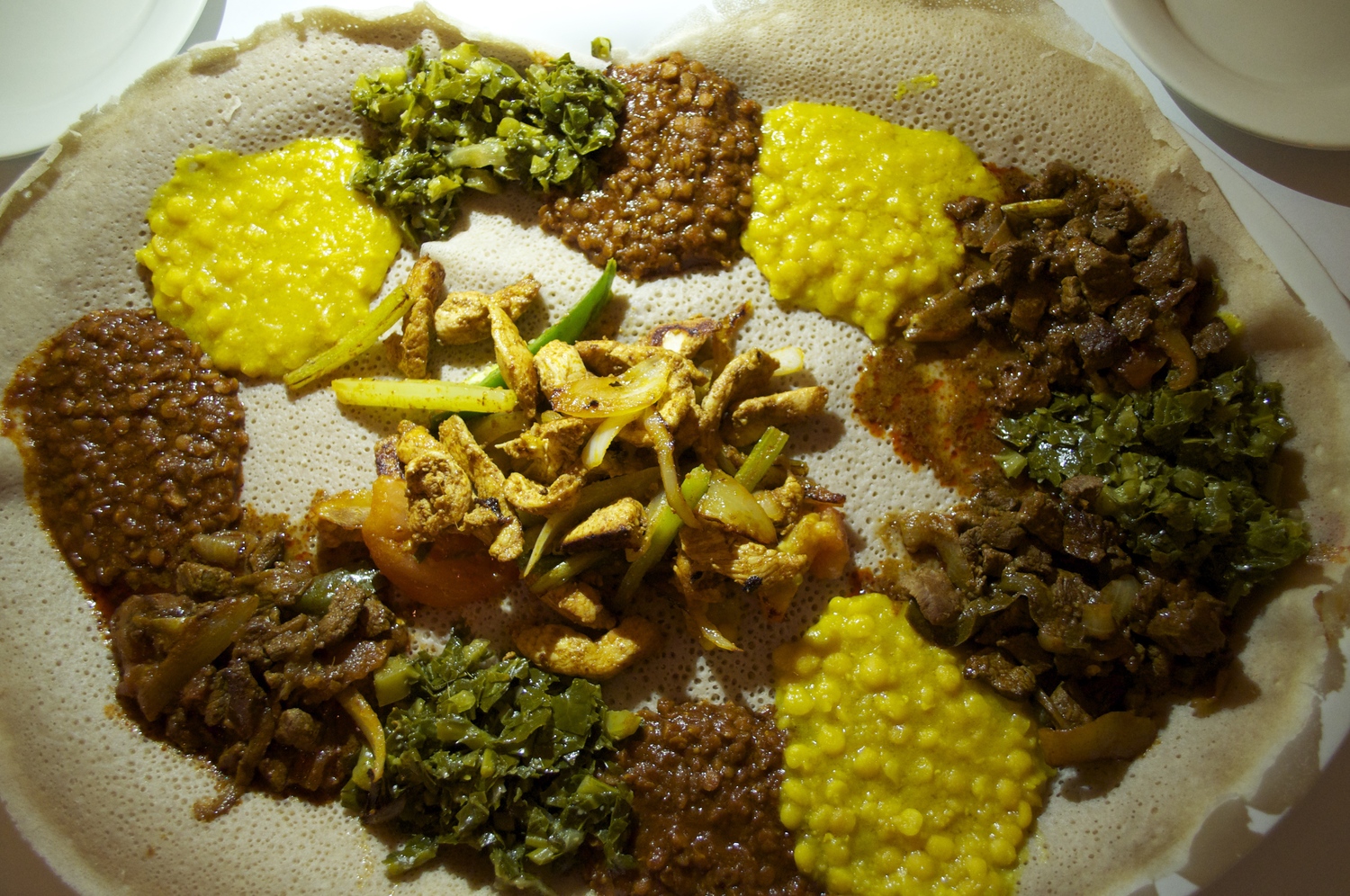
When our entrée arrived, it was quite possibly served on the biggest plate that I have ever seen! Sitting on top of the injera were our 3 choices of vegetables which we picked and 2 choices of meats. Here’s the list of items that we had chosen prior:
The Meat: Awash Chicken- chicken cubes marinated in garlic, ginger, and spices. Tibs Wat- Beef strips cooked in specialty seasoned berbere sauce.
The Veggies: Gomen (collard greens cooked with onions, garlic, and green peppers. Yemissir Kik Wat- Split red lentils cooked in berbere sauce Yater Kik Alicha- Yellow split peas cooked and seasoned with onions, peppers and herbs.
I started off by trying the vegetables first one by one, cause ya know, that just make sense in my head. I had each item along with the injera, which had a pretty interesting flavor, sticking true to its definition of a sourdough flatbread. The texture was very soft and was surprisingly flexible, yet strong. The texture of the injera allowed us to ‘pinch’ the food up with our fingers without ripping the injera and/or dropping any of the food while it made its way to our mouth (or in Sarah’s case, straight to the front of her shirt).
First, is the Gomen (collard greens, which in the above picture is the green vegetable), followed by the Yemissir Kik Wat (red split peas) and lastly the Yater Kik Alicha (yellow split peas). The vegetables were quite flavorful, especially the Yemissir Kik Wat- which were seasoned with berbere (combination of spices such as korarima, rue, ajwain or radhuni, nigella, and fenugreek- all of which I have actually never cooked with before, so this was a flavor treat!)
In the center, laid the tender strips of chicken breast seasoned with spices and sauteed with tomatoes, peppers, onions. I was so eager to try the other items on our dish that I actually only got to eat a couple of the strips of the chicken (they were one of the tables favorite item!). The beef was cooked slowly with berbere sauce and this is what gave it such great tenderness and unique Ethiopian flavors. My favorite was taking some of the sourdough flatbread and scooping up some beef and red lentils, but there were unlimited combinations that could have been had with this huge dish! Well, actually 20 permutations to be exact (big shout out to my middle school CT education for that one.)
If you want to experience something new, then I would advise you to go check out Awash and let us know how it went! They are located on 338 E 6th St (between 1st Ave & 2nd Ave) and if you have any questions, feel free to call them up at 1 (212) 982-9589.




















This site is protected by reCAPTCHA and the Google Privacy Policy and Terms of Service apply.